

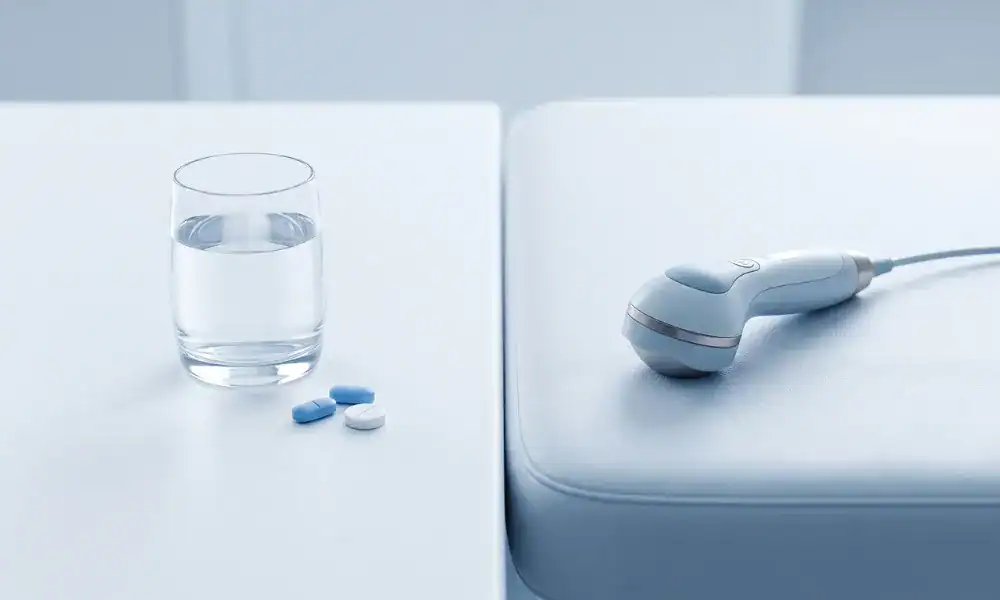
Choosing between oral medication and acoustic wave therapy is not about which one is better in general. It is about which one actually fits how ED is working in a specific case and what the person wants out of treatment.
The right ED treatment option comes down to mechanism, timeline, side effects, and long-term cost. Understanding how each one works makes that decision considerably clearer.
Both options have real merit under the right circumstances. Here is an honest side-by-side look at what each actually does and who tends to get the most out of each approach.
How Oral Medications Work
Sildenafil and tadalafil belong to a class of medications called PDE5 inhibitors. They work by relaxing smooth muscle in blood vessel walls, allowing more blood to flow into penile tissue during arousal.
The key word is temporarily. The vessels themselves do not change. No microplaque gets cleared. No new blood vessel growth gets stimulated. The medication creates better conditions for an erection for a few hours and then wears off.
For men whose vascular health is still reasonably intact this works well. For men with more significant underlying vascular damage the medication has progressively less to work with over time.
How Acoustic Wave Therapy Works
Acoustic wave therapy for ED operates on a fundamentally different principle. Rather than temporarily improving blood flow conditions, it targets the blood vessels themselves.
Low-intensity sound waves get delivered to penile tissue during each session. Those pulses break down microplaque deposits that have been restricting circulation and trigger a healing response that stimulates new blood vessel growth.
The result is improved vascular function built from within the tissue rather than borrowed from a pill. Benefits build gradually across a defined course of sessions rather than appearing on demand within an hour.
Onset and Duration
This is where the two approaches differ most noticeably in day-to-day experience. Oral medications act within 30 to 60 minutes and last several hours depending on which one is taken.
They work on demand which suits men who want a reliable option for specific situations without committing to a treatment course. Acoustic wave therapy does not work that way.
There is no single-session result. Improvement builds gradually across multiple sessions over several weeks as vascular tissue responds and new vessel formation develops.
The trade-off is that results tend to hold up considerably longer than a medication cycle and the body does not build tolerance to the treatment over time the way it can with pills.
Side Effects and Tolerability
Oral ED medications can cause headaches, facial flushing, nasal congestion, and visual disturbances in some men. More significantly, they interact with nitrate-based heart medications in ways that can cause dangerous drops in blood pressure.
Men on certain cardiovascular medications cannot safely take PDE5 inhibitors at all. Acoustic wave therapy is non-invasive and generally well tolerated.
Most men describe mild sensation during sessions rather than anything painful. No anesthesia is needed and there is no recovery period afterward.
For men who cannot take oral medications due to cardiovascular drug interactions, acoustic wave therapy becomes an important alternative worth discussing during an ED treatment evaluation.
Cost Over Time
Pills are a recurring per-use expense. For men who rely on them regularly that cost accumulates steadily over months and years with no endpoint in sight. Acoustic wave therapy involves a larger upfront investment for a defined course of sessions.
The aim is more durable results with fewer ongoing prescriptions over time. Individual outcomes vary and some men benefit from periodic maintenance sessions after completing their initial course.
Some patients also combine both approaches depending on what their evaluation shows and what stage of treatment they are in.
Neither option is universally cheaper. The right comparison depends on how long a man has been managing ED and what the realistic long-term picture looks like for their specific situation.
Who Tends to Do Better With Each Option
Oral medications tend to work best for men with mild to moderate ED where vascular health has not significantly declined.
Men who want an on-demand option without committing to a treatment course also tend to prefer this route initially. Acoustic wave therapy tends to produce stronger results for men with a confirmed vascular component to their ED.
It is also a strong fit for men whose pills have become inconsistent or who want to address blood flow directly rather than manage around it indefinitely.
Men who cannot take PDE5 inhibitors due to cardiovascular medication interactions are also strong candidates for this approach.
There Is No Universal Winner
The honest answer is that neither option is right for everyone. Two men with the same complaint can need completely different approaches based on what is actually driving their ED.
Some men do well on medication alone. Others get better results from acoustic wave therapy. Others benefit from combining both alongside proper low testosterone treatment when hormones are also a factor.
The only way to know which direction makes sense is through a proper evaluation that looks at the full picture rather than defaulting to the most familiar option.
Choice Men’s Health walks every patient through both options before recommending a direction. Call 404-999-1646 to have that conversation about a specific case.
This content is for general education and does not replace a one-on-one clinical evaluation. Individual outcomes vary and treatment should reflect each patient’s specific health history.
Frequently Asked Questions
Which is more effective, pills or acoustic wave therapy for ED?
Effectiveness depends on the underlying cause. Pills work well for mild to moderate ED while acoustic wave therapy tends to produce stronger results when restricted blood flow is a primary driver.
How long do results from acoustic wave therapy last?
Results tend to hold up considerably longer than a medication cycle. Some men benefit from periodic maintenance sessions after completing their initial course.
Can pills and acoustic wave therapy be used together?
Yes. Some men combine both approaches depending on what their evaluation shows and where they are in the treatment process.
Are there men who cannot take oral ED medications?
Yes. Men on nitrate-based heart medications cannot safely take PDE5 inhibitors. Acoustic wave therapy is an important alternative for those patients.
Does acoustic wave therapy work immediately?
No. Benefits build gradually across multiple sessions over several weeks rather than producing on-demand results within an hour.
How do I know which option is right for me?
A proper evaluation covering health history, blood work, and vascular risk factors determines which approach fits each individual situation best.
Is acoustic wave therapy painful?
Most men describe mild sensation during sessions rather than pain. No anesthesia is required and there is nothing to recover from afterward.